OpenAI Will Watermark Your Text — But Only If You’re in the EU
TL;DR: OpenAI is adding an invisible openai watermark to text from ChatGPT and Codex in the European Union, to comply with the EU AI Act. It’s mandatory if you’re in the EU and off by default everywhere else, including the API. Seven weeks ago Anthropic switched watermarking on for everyone, worldwide. Same technology, opposite defaults — and where you live now decides whether your AI-written text is marked.
What OpenAI announced
On 5 October 2026, TechCrunch reported that OpenAI will “start adding an invisible watermark to text generated by ChatGPT and Codex in the European Union to comply with the EU AI Act.”
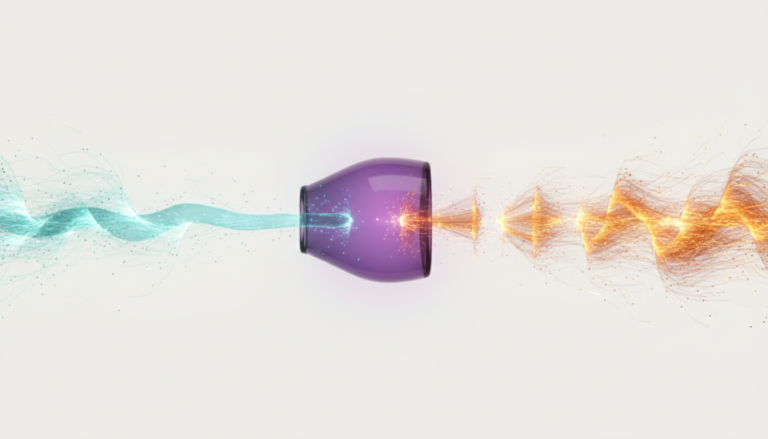
The openai watermark has a name — textGrain. It doesn’t add hidden characters or invisible spaces — as ActuIA puts it, “it is carried by the words themselves.” When the model has a real choice between words that would both work, a secret key quietly biases which one it picks. A detector holding that key can spot the pattern; you can’t.
The legal driver is Article 50 of the EU AI Act, whose transparency rules took effect on 2 August. Three things to know about scope:
| Who | Watermark | Choice |
|---|---|---|
| ChatGPT and Codex users in the EU | On, rolling out over coming weeks | None — it’s the law |
| API developers, anywhere | Off by default | Opt in via organisation or project settings |
| ChatGPT users outside the EU | Not mentioned | n/a |
OpenAI says the signal survives copy and paste, doesn’t identify the user, and caused no meaningful change in model performance.
Same technology, opposite defaults
This is the part worth sitting with, because it’s a genuine fork in the road.
In August we wrote that Claude watermarks what it writes, which is the same idea as the openai watermark — and Anthropic applied it worldwide, with the stated reason that it didn’t “yet have a durable way to scope it by region.” Everyone got it, everywhere, on by default.
OpenAI has gone the other way. Mandatory where the law requires it, off by default where it doesn’t. ActuIA draws the same contrast, and The New Stack’s headline puts it plainly: “unlike Anthropic, it’s off by default.”
Neither choice is obviously wrong. Anthropic treated marking as a property of the model; OpenAI has treated it as a regional compliance obligation. But the consequence for you is concrete: the openai watermark on your text now depends on your geography and your vendor, not on anything about the text. The same prompt, run by two people in two countries, produces output with different provenance properties.
The numbers nobody is quoting
Here’s where the openai watermark gets more interesting than the announcement suggests, and the figures come from OpenAI’s own technical report via the coverage.
It depends heavily on length. ActuIA reports detection at roughly 95% on 400-token passages and about 80% on 200-token passages. A paragraph is a much weaker signal than an essay.
It degrades fast under editing. TechCrunch reports that replacing 10% of words with synonyms dropped detection from about 92% to 66%. ActuIA reports that at 25% word replacement, detection falls to 17%. In other words: a normal editing pass largely erases it.
And it varies enormously by language. This is the finding that should give the EU pause, because the mandate is EU-wide: detection ranges from 42.2% in Romanian to 69.0% in Spanish.
Read that last line again. A rule meant to mark AI text across the Union works roughly half as well in some member states as in others. Nobody is leading with that, and it is the single most consequential number in the report.
You can’t check the openai watermark, and absence proves nothing
Two caveats that matter more than the technology.
The openai watermark detector is not available to you. ActuIA reports OpenAI has “provided initial detector access only to approved researchers and expert organizations” — Cornell, ETH Zurich and Slovakia’s KInIT among them. So you cannot test whether your own output is marked, and nor can your client, your editor or your university.
And OpenAI says plainly that a negative result means nothing: “The absence of a detected watermark does not prove human authorship.” Text may be too short, edited, translated, from a model that doesn’t mark, or written before marking existed.
That is a responsible caveat and it should be quoted every time this comes up, because the predictable misuse is exactly the opposite — someone running a detector, getting nothing, and concluding a human wrote it. Or getting a hit on a 200-token paragraph and treating 80% as certainty.
What this means if you’re building
Our August piece answered the question builders actually ask about any of this, and it holds for the openai watermark too: watermarking barely touches working code and does mark the prose around it. Code has far less room for synonym choice — when a function name or an API call has to be exact, there’s no entropy to hide a signal in. That holds whichever vibe coding tool wrote it. Your landing page copy, product descriptions and emails are a different matter.
So for most readers the practical picture is:
- Your app’s code: largely unaffected by the openai watermark, whichever vendor you use.
- Your marketing copy, if you’re in the EU and using ChatGPT: marked, as of the coming weeks, with no opt-out.
- The same copy, outside the EU: not marked by OpenAI; marked by Anthropic, wherever you are.
None of this makes AI-written copy detectable in practice today — the detector is restricted, the signal is weak on short text, and editing degrades it fast. It does mean the infrastructure now exists, and the direction of travel is one way.
Who should care (and who shouldn’t)
- In the EU, using ChatGPT for customer-facing copy: this applies to you automatically. Nothing to do, but know it’s there — and if you pay for it, the plan changes we covered last week are the thing that actually costs you money this month.
- Building an app with Codex or Claude Code: your code is essentially unaffected. Carry on.
- Writing for clients who ask “is this AI?”: the honest answer is that nobody outside a few universities can check, and a negative result proves nothing. Don’t let a detector screenshot settle an argument.
- Running an API integration: the openai watermark is off unless you turn it on. If you want provenance on your output, that’s now a setting you control.
- Choosing between vendors on this basis: it’s a thin reason to switch, but it is a real difference — and our comparison is where the reasons that matter more live.
Our take
We think the openai watermark’s regional approach is the more defensible one, and we’re uneasy about what it produces.
Anthropic marking everything worldwide was criticised hard in August — John Gruber called it “a perversion of writing” — but it had the virtue of consistency. OpenAI’s version is better tailored to the law and worse as a standard: provenance that depends on your postcode isn’t really provenance. A reader in Dublin and a reader in Denver cannot interpret the same unmarked paragraph the same way, and neither can check.
The language spread is the part that should be fixed before anything else. A transparency rule that performs at 69% in Spanish and 42% in Romanian isn’t applying equally across the Union it covers. That’s not OpenAI’s fault — it’s a property of how much lexical room each language leaves — but it’s a serious gap in a regime built on the assumption that marking works.
What we’d actually do about the openai watermark: nothing, and stop worrying about detection. If you’re writing with AI and editing properly, you’re already below the threshold where any of this is reliable. The reason to disclose AI involvement is that it’s honest and your readers may care — not because a watermark might catch you. It very probably won’t.
Not sure which AI tool fits what you’re building? Take the 60-second Vibe Coding Tool Finder quiz →
FAQ
What is the OpenAI watermark?
It’s an invisible signal called textGrain that OpenAI embeds in text from ChatGPT and Codex by subtly biasing word choice against a secret key. It adds no hidden characters — the pattern is carried by the words themselves — and survives copy and paste. It’s mandatory for EU users under Article 50 of the AI Act and off by default elsewhere.
Can I tell if text has an OpenAI watermark?
No. OpenAI has given detector access only to approved researchers and expert organisations, including Cornell, ETH Zurich and Slovakia’s KInIT. OpenAI also states that the absence of a detected watermark does not prove human authorship, because text may be short, edited, translated or produced by a model that doesn’t mark.
Does it watermark code?
Barely. Watermarking works by choosing between words that would both do, and code leaves far less of that room — an exact function name or API call has no synonym. Prose written around your app, like landing page copy and emails, is the part that carries a detectable signal.
Is my ChatGPT output watermarked if I’m not in the EU?
Not under this rollout, which OpenAI has scoped to the European Union. API users anywhere can switch it on themselves, but it stays off by default. Anthropic, by contrast, applies its watermark worldwide.